Description
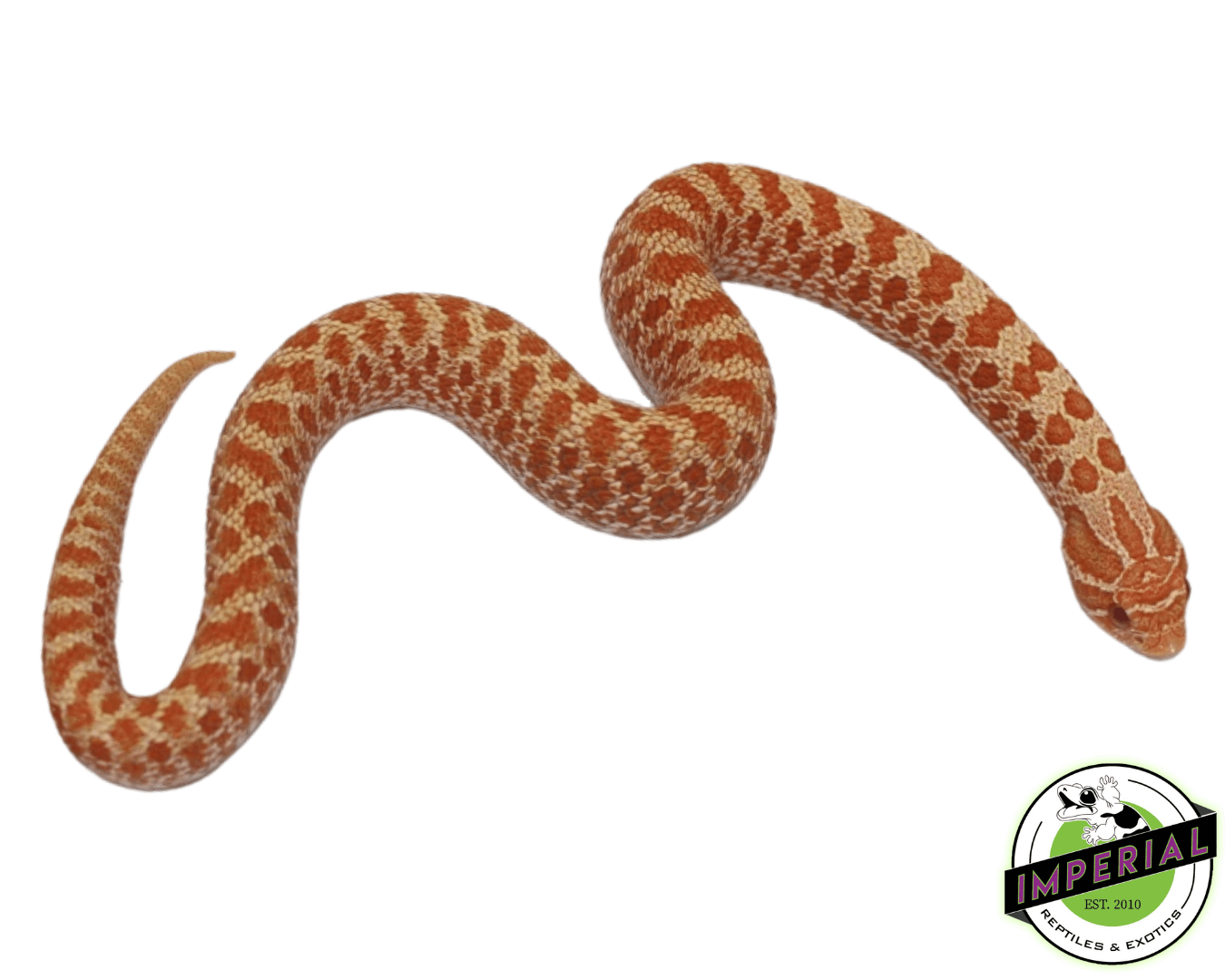
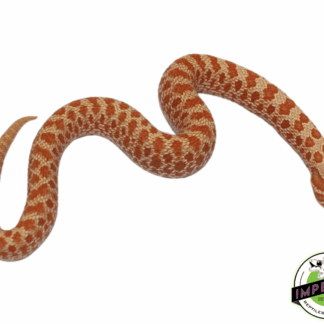
This Albino Western Hognose Baby is a captive-bred reptile for the keeper seeking a unique, manageable colubrid. Its striking amelanistic pattern and characteristic upturned rostral scale make it a standout display animal. Since arriving on our shelves in fall 2025, this morph has shown a low return rate, with customers consistently satisfied with the animal’s health and appearance.
Stand-Out Features
- Albino (Amelanistic) Morphology: Displays vibrant yellow, orange, and red patterning on a clean white background, lacking black pigment.
- Characteristic Hognose Snout: The upturned rostral scale is a defining trait, adapted for burrowing in its natural habitat.
- Captive-Bred & Established Feeder: Hatchling is feeding reliably on frozen/thawed pinkie mice, reducing initial acclimation challenges.
- Manageable Adult Size: Western Hognoses typically reach 1.5 to 2 feet, making them suitable for standard 20-gallon enclosures as adults.
- Generally Docile Temperament: Known for being less flighty than other colubrids, often displaying curious, bluffing behaviors rather than aggression.
Technical Data
| Species | Heterodon nasicus (Western Hognose Snake) |
| Morph | Albino (Amelanistic) |
| Age | Baby / Hatchling |
| Feeding Status | Established on Frozen/Thawed Pinkie Mice |
| Weight (measured) | 7.1 oz |
| Sex | Currently Unsexed (Probing available upon request) |
| Origin | Captive-Bred (USA) |
Your Questions Answered
What setup does a baby hognose need?
A 10-gallon enclosure is sufficient for a hatchling. Provide a secure lid, an under-tank heat mat on one side regulated by a thermostat (creating a 90-95°F hot spot), aspen shavings or similar substrate for burrowing, a small water dish, and at least one snug hide on both the warm and cool ends.
Are they venomous?
Western Hognose Snakes are rear-fanged and produce a mild venom used to subdue amphibian prey. This is not considered medically significant to humans, but a bite may cause localized swelling or irritation. Allergic reactions are possible but extremely rare. They are not aggressive and biting is an uncommon defensive behavior.
What is their typical behavior?
They are known for dramatic bluffing behaviors when startled, including flattening their necks (cobra-like hooding), hissing, and mock strikes with a closed mouth. They may also play dead. With regular, gentle handling, they typically become quite calm and tractable, making them engaging display animals.
✅ Plain brown box — no markings
✅ Not happy? Return within 30 days.
✅ Checkout secured with SSL encryption
✅ Domestic shipping — no customs
nn
Reviews
There are no reviews yet.