Description
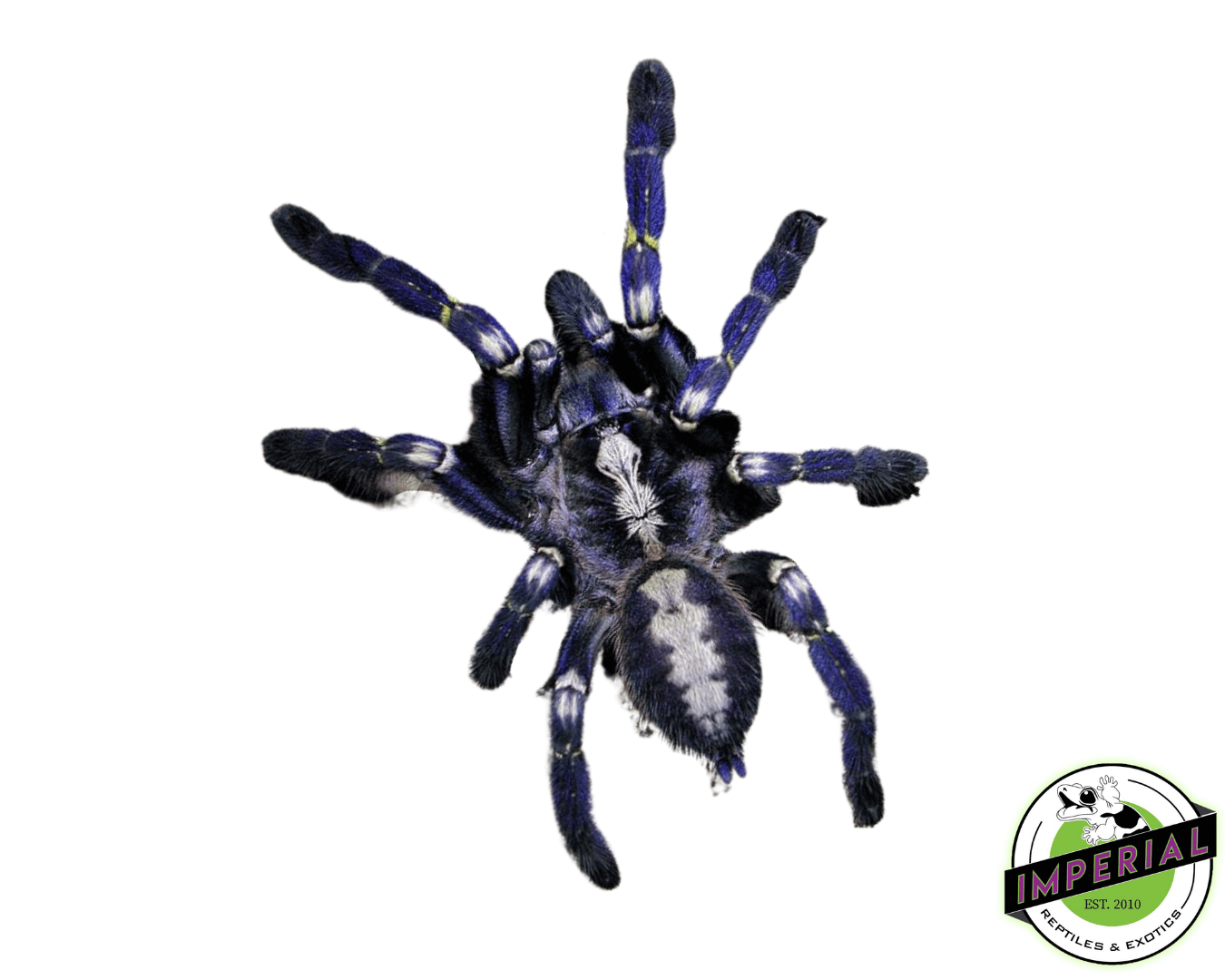
The Gooty Sapphire Ornamental Tarantula (Poecilotheria metallica) is a captive-bred, arboreal species for the intermediate to advanced keeper. Its primary benefit is its stunning, iridescent blue coloration, which is most vibrant in mature specimens. This is a display animal that requires specific care but offers immense visual reward. Since arriving on our shelves in late 2024, customer satisfaction has been high, with a very low return rate indicating buyers know what they’re getting.
Stand-Out Features
- Vibrant Metallic Blue: The carapace and legs display an intense, iridescent blue coloration, especially under direct light.
- Arboreal Build: A fast, agile climber requiring a tall enclosure with ample vertical cork bark or other anchor points for webbing.
- Captive-Bred Availability: Sourced from established captive breeding projects, promoting conservation and predictable health.
- Impressive Size: A large tarantula with a legspan that can reach 6-7 inches, making it a significant display specimen.
- Defensive Nature: Known for speed and a potent venom; not recommended for handling. Respectful observation is key.
Technical Data
| Scientific Name | Poecilotheria metallica |
| Common Name | Gooty Sapphire Ornamental Tarantula |
| Type | Arboreal, Old World |
| Adult Size (Legspan) | 6-7 inches |
| Temperament | Fast, Defensive, Not for Handling |
| Care Level | Intermediate to Advanced |
| Weight (measured) | 7.6 oz |
| Origin | Captive-Bred (Native to a small forest in India) |
Your Questions Answered
Is this suitable for a beginner?
No. Poecilotheria metallica is an Old World tarantula known for its speed, defensive nature, and medically significant venom. It requires an experienced keeper who understands how to manage a fast, defensive arboreal species without attempting to handle it.
What size enclosure does it need?
This is an arboreal species. A tall terrarium is essential, with more height than floor space. For an adult, an enclosure around 12″x12″x18″ or larger is appropriate. Provide vertical cork bark slabs or tubes for webbing anchor points and a hide.
What do you feed it?
Offer appropriately sized live feeder insects like crickets, dubia roaches, or locusts. Adults typically eat one or two large feeders per week. Always remove uneaten prey. Provide a shallow water dish with clean water, refreshed regularly.
✅ Plain brown box — no markings
✅ Not happy? Return within 30 days.
✅ Checkout secured with SSL encryption
✅ Domestic shipping — no customs
nn

Reviews
There are no reviews yet.