Description
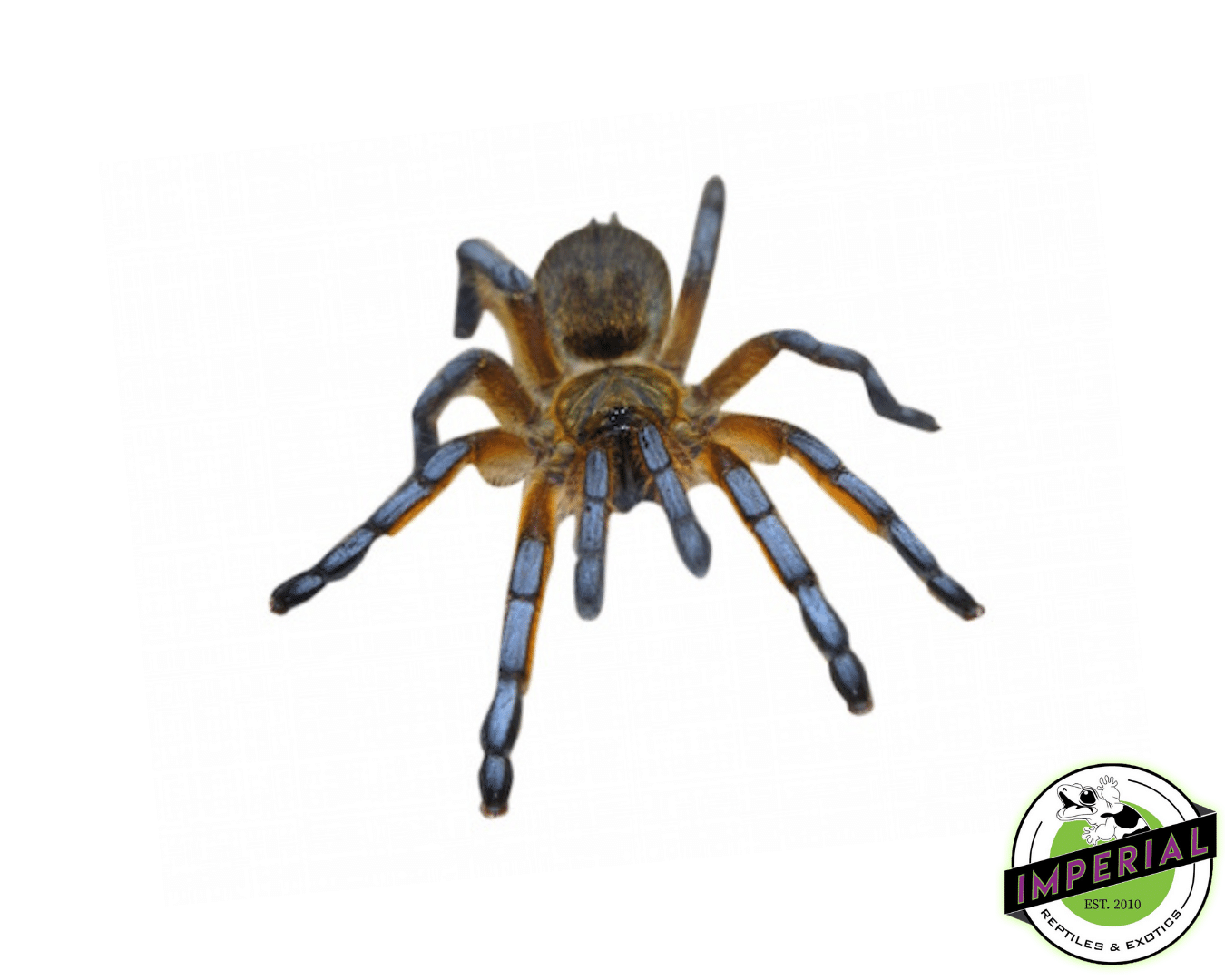
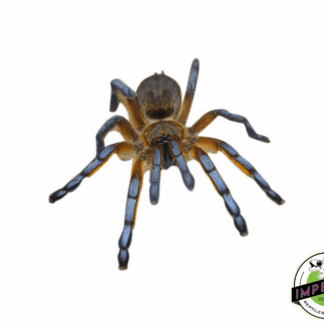
The Golden Blue-legged Baboon Tarantula (Harpactira pulchripes) is a fast-growing, fossorial species from South Africa, known for its striking metallic gold carapace and vivid blue legs. This tarantula is for the intermediate keeper ready for an active, defensive spider that constructs impressive burrows. It has been on our shelves since fall 2025 with a low return rate, confirming customers get exactly what they expect from this specimen.
Stand-Out Features
- Vibrant Adult Coloration: Mature specimens display a brilliant metallic gold carapace contrasted with deep blue legs and chelicerae.
- Active Burrower: A dedicated fossorial species that creates extensive tunnel systems, providing constant viewing interest.
- Rapid Growth Rate: Reaches a mature legspan of 5-6 inches relatively quickly compared to many Old World species.
- Defensive Nature: Possesses potent venom and a defensive posture; not recommended for handling.
- Hardy Specimen: Adapts well to captive conditions when provided with proper dry substrate and a deep burrowing area.
Technical Data
| Scientific Name | Harpactira pulchripes |
| Common Name | Golden Blue-legged Baboon Tarantula |
| Type | Terrestrial / Fossorial (Old World) |
| Adult Size (Diagonal Leg Span) | 5 – 6 inches |
| Temperament | Defensive, fast, not for handling |
| Growth Rate | Fast |
| Weight (measured) | 4.3 oz |
| Origin | South Africa |
Your Questions Answered
What are the housing requirements for this tarantula?
Provide a secure, well-ventilated enclosure with at least 6-8 inches of dry, packed substrate (like coco fiber or topsoil) for burrowing. A starter burrow or deep hide is essential. Maintain low humidity and a warm temperature gradient of 75-85°F. A shallow water dish should be provided and kept clean.
Is this species suitable for beginners?
No. Harpactira pulchripes is an Old World tarantula with potent venom, significant speed, and a defensive temperament. It is recommended for intermediate to advanced keepers with experience in managing fast, defensive species using proper tools and caution.
What do you feed it and how often?
Feed appropriately sized live prey, such as crickets, roaches, or mealworms. For juveniles, feed 1-2 times per week. Adults can be fed one larger prey item every 7-10 days. Always remove uneaten prey to avoid stress or injury to the tarantula.
✅ Plain brown box — no markings
✅ Not happy? Return within 30 days.
✅ Checkout secured with SSL encryption
✅ Domestic shipping — no customs
Reviews
There are no reviews yet.