Description
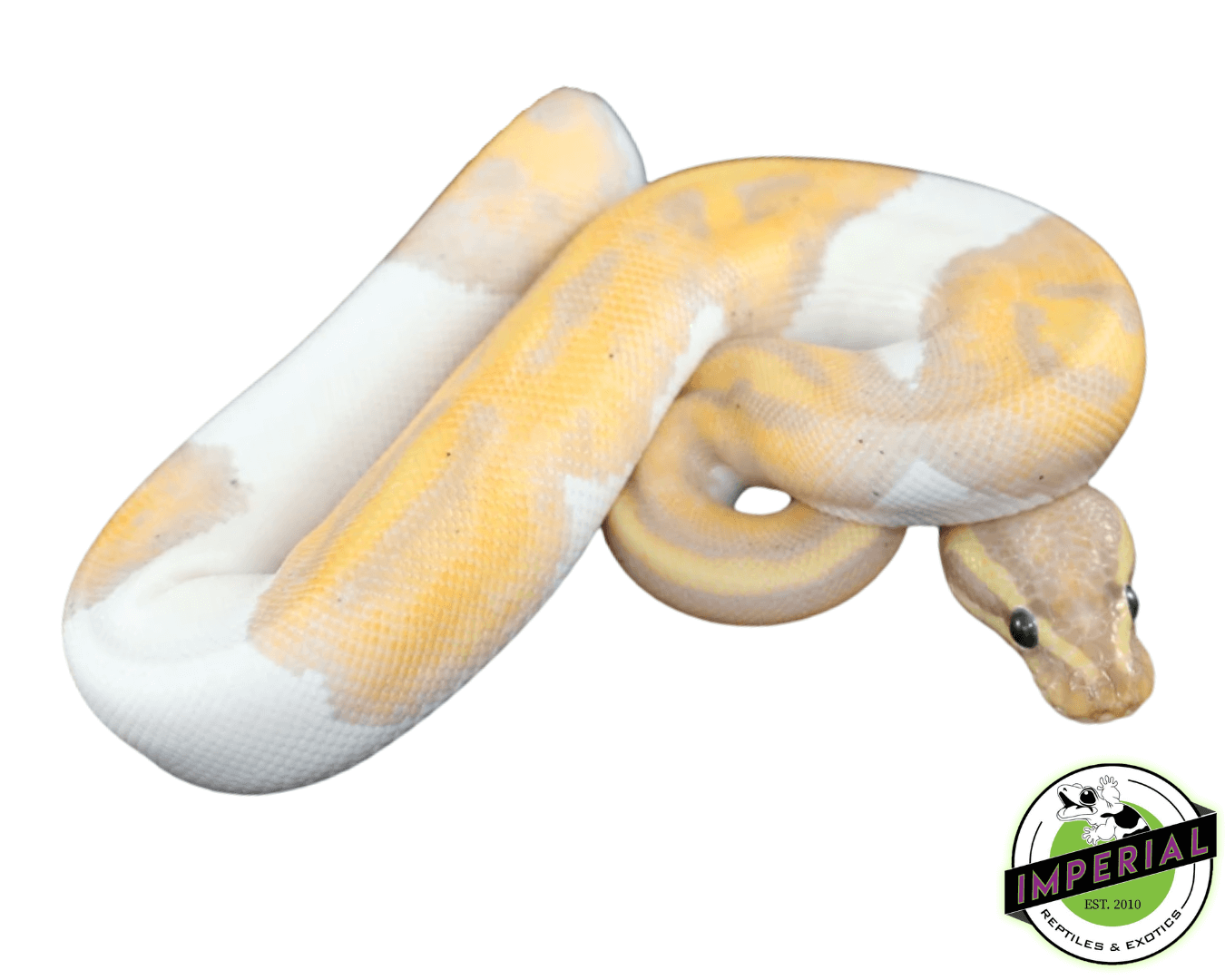
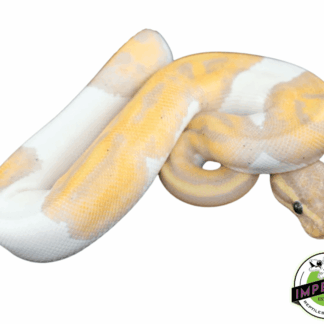
The Banana Piebald Ball Python Baby is a stunning morph that combines the vibrant yellow Banana gene with the high-contrast Piebald pattern. This is an ideal choice for intermediate keepers looking to add a visually striking, reliably feeding animal to their collection. Since we first offered this morph in early 2026, it has consistently ranked among our most reordered items, with many customers returning for a second.
Stand-Out Features
- Vibrant Banana Coloration: Displays bright yellow and lavender hues that intensify with age.
- High-Contrast Piebald Patterning: Features clean, crisp white patches that create a dramatic, unique appearance on every animal.
- Proven Feeding Response: Our hatchlings are established on frozen/thawed rodents, offering a reliable start for new owners.
- Excellent Temperament: Ball pythons are known for their docile nature, and this morph is no exception, making it a great display animal.
- Strong Genetic Potential: A fantastic foundation animal for future breeding projects involving Banana or Piebald genes.
Technical Data
| Species | Python regius |
| Morph | Banana Piebald |
| Age | Baby (hatchling) |
| Weight (measured) | 5.9 oz |
| Feeding Status | Established on F/T rodents |
| Sex | Unsexed (available upon request) |
| Housing | 10-20 gallon enclosure recommended |
| Humidity | 50-60% with a warm hide at 88-92°F |
Your Questions Answered
How does the Piebald pattern develop as the snake grows?
The white patches are present from hatching. As the snake matures, the colored areas—especially the Banana yellow—will typically become more saturated and vibrant, while the white areas remain clean. The overall pattern scale does not change, but the contrast often improves.
Is the Banana gene associated with any known health issues?
No. The Banana gene in ball pythons is a co-dominant color morph and is not linked to any neurological or physical health problems. It is a stable, well-established mutation in captive breeding. These are healthy, robust animals when provided with proper care.
What is the genetic outcome of breeding this snake?
This animal carries one copy each of the Banana and Piebald genes. Breeding it to a normal ball python would statistically produce 25% Normal, 25% Banana, 25% Piebald, and 25% Banana Piebald offspring. Breeding to another visual Banana Piebald increases the odds of producing more of this specific morph.
✅ Plain brown box — no markings
✅ Not happy? Return within 30 days.
✅ Checkout secured with SSL encryption
✅ Domestic shipping — no customs
Reviews
There are no reviews yet.